Need AC repair in New Orleans? Call us any time, day or night, and we'll connect you with a local air conditioning pro who can find the problem and get your house cool again. One call, a real answer, and a technician who already works in your part of town.
New Orleans is about as hard on an air conditioner as any city in the country. The cooling season runs most of the year, and the system isn't just cooling the air. It's pulling water out of it all day long.
Why air conditioners wear out faster in New Orleans
A unit that might last a long time somewhere drier gets worked hard here. Three things do most of the damage.
- The heat and humidity. From late spring into fall, a lot of systems run nearly nonstop. All that moisture also means more water through the drain line and more chances for it to clog.
- Older homes. Shotgun houses, raised Creole cottages and old doubles often have ductwork in hot attics or crawlspaces. That makes the whole system work harder to keep up.
- Storms and the power grid. Hurricane season brings outages and surges, and those are rough on capacitors, contactors and compressors.
The problems we hear about most
Most calls fall into a handful of patterns. Knowing which one you have helps the technician show up with the right parts.
Running but not cooling
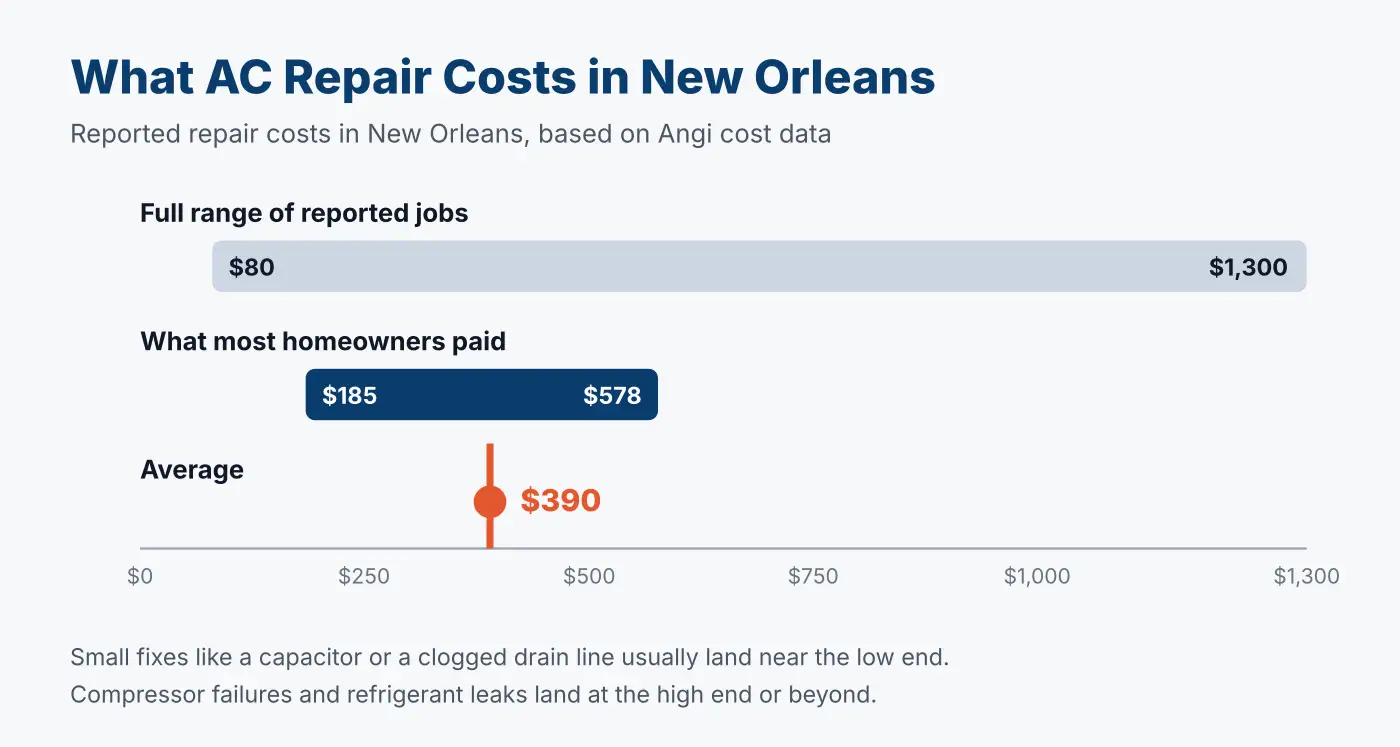
The fan is on and air is moving, but it's warm. The usual suspects are a failed capacitor, a dirty filter or coil, or low refrigerant from a leak. A bad capacitor is one of the most common fixes in hot climates, and it's usually one of the cheaper ones. See our page on an AC that's not cooling for what to check first.
Won't turn on at all
It could be the thermostat, a tripped breaker, a bad contactor, or a float switch that shut the system off because the drain backed up. Don't keep resetting the breaker. If it trips again, something's wrong, and forcing it can turn a small repair into a big one.
Water leaking inside
In this humidity, a clogged condensate drain line is one of the most common calls there is. Catch it early, before it soaks a ceiling or a floor. A tech can clear the line and check the pan and float switch while they're there.
Ice on the lines or the coil
Ice usually points to an airflow problem or low refrigerant. Turn the system off, switch the fan to on so it can thaw, and call. Running it frozen can damage the compressor.
Strange noises or a burning smell
Grinding, squealing, buzzing or a burning smell means shut it off at the thermostat and the breaker. Then call. Some of these are a worn motor or a loose part, and some are electrical problems you don't want to run.
When it's an emergency
No AC in a New Orleans August can be dangerous, not just uncomfortable. If someone in the house is elderly, an infant, pregnant, or has a health condition that makes heat risky, tell us when you call so we can push for the soonest visit. If anyone shows signs of heat illness, like confusion or fainting, call 911 first.
While you wait, close the blinds on the sunny side of the house, run every fan you have, and drink water. Our emergency AC repair page covers what to do after a storm or a power outage too.
Before you call, check these four things
Sometimes the fix is free. Take two minutes and check these first.
- The thermostat. Make sure it's set to cool, a few degrees below the room temperature, and the batteries aren't dead.
- The breakers. Check the breaker for the outdoor unit and the one for the indoor air handler.
- The air filter. A filter caked with dust can choke the whole system and freeze the coil.
- The drain pan. Look for standing water in the pan under the indoor unit, which can trip the float switch and shut everything down.
If none of that does it, call. A trained tech has the gauges and the know-how to find what you can't see.
Repair or replace
A repair usually makes sense when your system is under about 10 years old and the fix is a small part of what a new one costs. Once a unit is older, needs a compressor, or uses R-22 refrigerant that's no longer made, it's worth getting a replacement price too.
A good technician will lay out both options and let you decide. If a company pushes a new system before they've even diagnosed the old one, get a second opinion.
Keep it from happening again
Most of the breakdowns we hear about in July started as small problems in March. A yearly tune-up catches weak capacitors, clogged drains and dirty coils before the heat finds them. ENERGY STAR's maintenance checklist is a good place to see what a proper tune-up should cover, and our AC maintenance page explains how often to schedule one here.
Serving New Orleans and the whole metro
We connect homeowners with HVAC pros across New Orleans, from Uptown and Mid-City to Lakeview, Gentilly, New Orleans East and Algiers. We also cover Metairie, Kenner, the Westbank, St. Bernard, the River Parishes and the Northshore. Find your area in the list below or call and give us your address.